
China's UAV Export Controls in 2026: A Buyer's Plain-English Guide
Which parameters put a drone or component on the control list, what the licence process asks of an exporter, and how to plan a shipment that will not be stopped at the port.
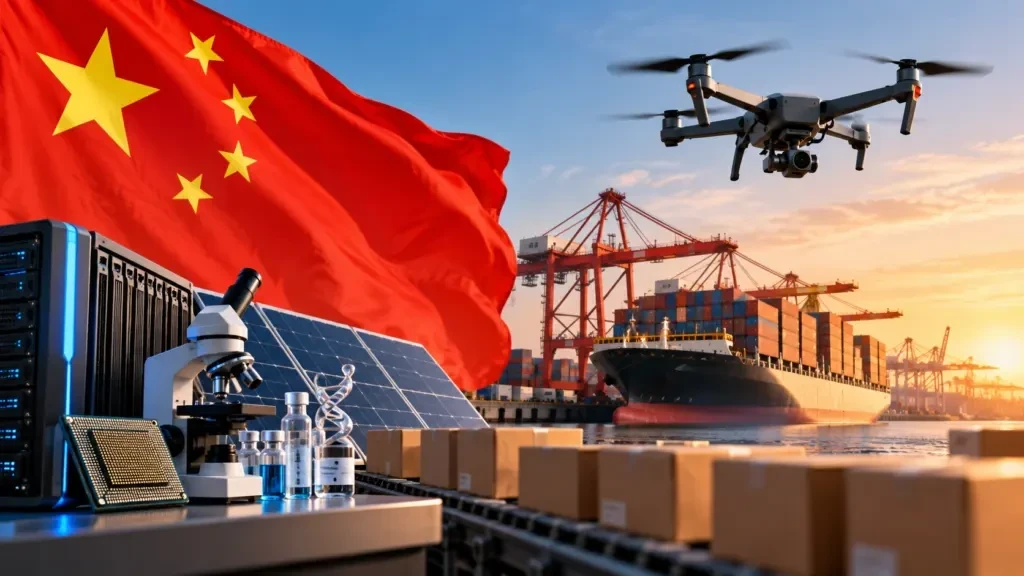
China has announced new export control measures covering selected advanced technologies and unmanned aerial vehicles, adding compliance steps for exporters and international logistics providers.
Outlined in separate MOFCOM announcements in October 2026, the measures touch technology transfer, export authorisation and customs documentation. Some provisions are already in force; others apply from November, so the deadlines differ depending on what is being shipped.
Advanced technologies: registration already applies
That gap is the practical point: the catalogue change is still proposed, while the registration obligation is already in place.
- Announcement No. 48 of 2026 proposes 40 additions to the Catalogue of Technologies Prohibited or Restricted from Export
- 23 artificial intelligence, five biomedical and 12 photovoltaic technologies, plus certain core equipment built on them
- Public comment stays open until 15 November 2026 — the catalogue amendment is not yet final
- An interim export pre-registration duty took effect on publication and also covers transactions already started, including shipments in transit
UAVs: authorisation from 18 November
- Updated controls issued by MOFCOM, the General Administration of Customs and the CMC Equipment Development Department
- Scope extends to specified UAVs and to engines, autopilots, communication equipment, motors, propeller blades, flight-control systems and autonomous-navigation technologies
- Exports of covered items require authorisation under China's export control framework from 18 November 2026
- Customs declarations must carry the relevant technical information, including for products whose specifications sit close to controlled items
- The Dual-Use Items Export Control List is updated alongside the new measures
What it means for international shipments
None of the announcements is a blanket ban on AI, biomedical, photovoltaic or drone-related exports. Whether a shipment is covered depends on the technologies, items and technical specifications named in each measure.
China's drone export market grew rapidly in 2025 and 2026, with increases in both export volume and value. At the same time, export controls have tightened, covering complete aircraft, core components, software and technology. Regulatory scrutiny also extends to customs declarations, destination countries, end users and end uses, making export compliance increasingly important for businesses across the supply chain.
- Separate technology transfers that fall under interim registration from UAV items that need export authorisation
- Classification and technical documentation decide scope, especially where specifications sit near the thresholds
- For cargo already moving, check whether the interim registration provisions apply to the transaction
Controls extend beyond complete drones
Two announcements issued in 2026 warrant particular attention. Announcement No. 78, 2026 of the General Administration of Customs of the People's Republic of China sets out export declaration requirements for drones and related items, whether or not they are controlled dual-use items. Announcement No. 34, 2026 of the Ministry of Commerce of the People's Republic of China subjects exports of key drone components and related technologies to the United States to strict case-by-case review and removes licensing facilitation measures.
Controlled items may include flight controllers, navigation equipment, communications systems, mission payloads and engines, together with certain equipment for producing, testing and inspecting drone-related components. Components can be independently controlled, even when exported separately from a complete aircraft.
Classification depends on the wording of the applicable control entry, including technical thresholds, functions and any specific design or use requirements. Commercial names, customs codes and supplier descriptions alone may not establish whether an item is controlled. Integrated equipment, such as infrared camera payloads, may require closer examination of its internal components and capabilities.
Software and technology require separate attention. Electronic transmission of technical documents, over-the-air (OTA) updates and technical assistance may constitute controlled transfers even where no physical goods leave China. Classification procedures therefore need to cover intangible transfers alongside hardware shipments.
Lessons from customs enforcement
Enforcement cases highlight several recurring risks. First, disassembling a controlled drone or shipping components separately does not remove licensing obligations. China's dual-use export control framework expressly prohibits circumvention through modification or disassembly.
Second, civilian or agricultural use does not automatically exclude a product from control. Cases involving agricultural drones and autopilots demonstrate that classification turns on the applicable control criteria, rather than the product's commercial positioning.
Third, ordinary product descriptions may conceal controlled functions. Items sold as flight-control accessories, gimbal cameras or drone-display controllers may require licences depending on their specifications and design. A component's standalone sale does not prevent it from being controlled.
Finally, repair shipments, samples, gifts and other non-sale transfers are not automatically exempt. These arrangements require an assessment of the item's classification and the applicable licensing or other procedures.
Building an effective compliance framework
A product-level classification register provides a practical starting point. It can record technical specifications, relevant control entries, the basis for each conclusion and review history. Product modifications require reassessment, particularly where performance approaches a control threshold. Where classification remains uncertain, consultation through official channels may help clarify the applicable requirements.
Customer due diligence also needs to identify the ultimate recipient, intended use and onward supply arrangements. Contractual restrictions on unauthorised military use, modifications and onward transfers can support these checks, but do not replace them. Records of enquiries, notices and undertakings involving downstream parties should be retained.
Internal procedures should standardise classification, licence applications, customs declarations, record retention and reporting of irregularities. Businesses should define compliance responsibilities, conduct regular staff training and retain training records.
Businesses should monitor changes to control lists, regulations and restricted-party lists, and update product classifications and contractual clauses accordingly. They should also maintain compliance records, conduct periodic internal audits and promptly address any issues identified.
Conclusion
Drone export compliance extends across aircraft, components, software and technology. Businesses should adapt to regulatory requirements, review their products for export control compliance and establish ongoing procedures covering item classification, customer due diligence, proper customs declarations and record retention. These measures help reduce legal risks and support compliant cross-border operations.
Need this checked against a specific order?
Talk to a Specialist